

Table of contents
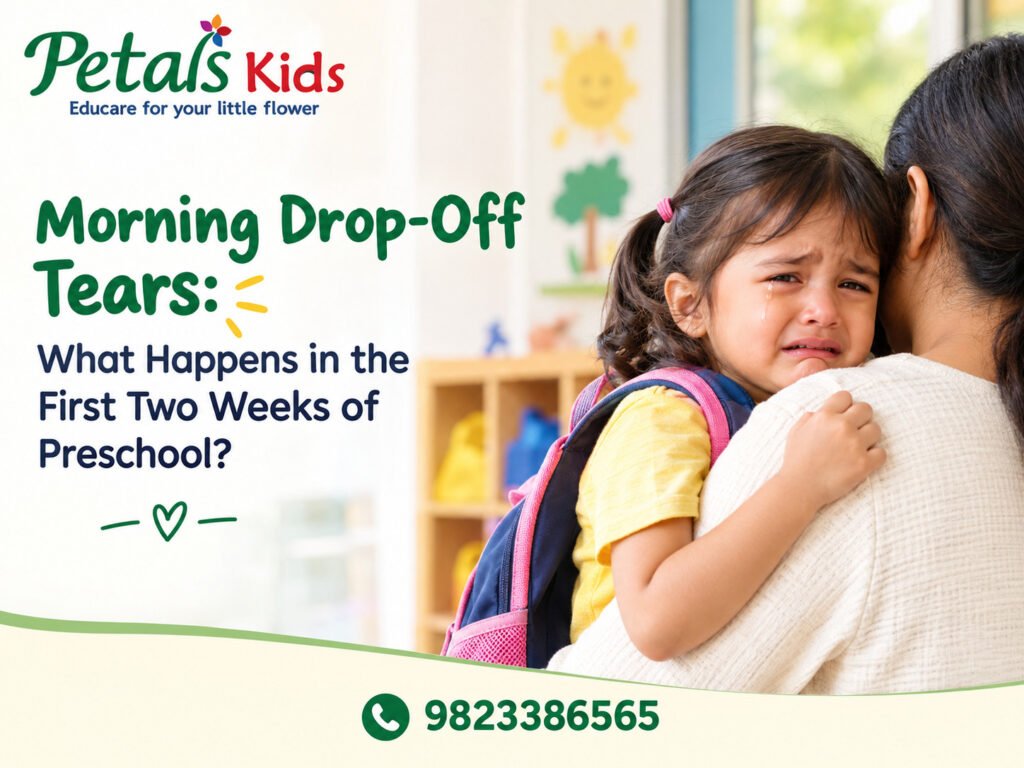
Does your child cry, cling to you, or refuse to enter the classroom every morning? If you have a child crying at preschool drop-off, you may wonder whether this is normal or whether your little one is ready for school.
Starting preschool is a big change. Children meet new teachers, explore unfamiliar surroundings, and learn to spend time away from their parents. Some settle within a few days, while others need several weeks. With patience, a predictable routine, and support from teachers, the transition can become easier.
Why Do child crying at preschool drop-off
Children may cry because they miss their parents, feel uncertain about their new surroundings, or do not yet understand when their parents will return. Tiredness, hunger, and changes in routine can also make mornings more difficult.
Crying does not automatically mean your child is unhappy at preschool. What matters is how they feel after you leave and whether they gradually begin accepting comfort and participating in activities.
What to Expect During the First Two Weeks
Days 1–3: Everything feels unfamiliar
Your child may cling to you, cry, or hesitate to enter the classroom. Introduce them to the teacher, offer reassurance, and follow a warm, predictable goodbye routine.
Days 4–5: Small signs of familiarity
Your child may recognise the teacher, classroom, or favourite activities. Tears may continue, but accepting comfort or showing interest in play can be encouraging signs.
Days 6–8: Adjusting to the routine
Returning after a weekend may bring back some tears. Keep mornings consistent and reassure your child that you will return after school.
Days 9–10: Look for gradual progress
Your child may enter more willingly, talk about classroom activities, or settle more quickly. Some children need longer than two weeks, so avoid comparing their progress with others.
This timeline is a general guide, not a deadline. Every child adjusts at a different pace.
5 Practical Tips to Make Preschool Drop-Off Easier
1. Keep Goodbyes Short and Reassuring
Give your child a hug, say goodbye confidently, and explain that you will return after school. Repeatedly leaving and returning can make separation less predictable.
2. Create a Consistent Morning Routine
Prepare clothes and the school bag the night before. Allow enough time for breakfast and getting ready so your child does not feel rushed.
3. Never Leave Without Saying Goodbye
Leaving secretly may avoid tears temporarily, but it can make your child uncertain about when you might leave again. Be honest, warm, and consistent.
4. Talk About School Positively
Ask about a song, story, toy, or activity your child enjoyed. Avoid comparing your child with classmates or telling them they are too big to cry.
5. Stay Connected With the Teacher
Ask how long your child cries after you leave, whether they accept comfort, and whether they participate in activities. These details help you understand how your child is adjusting.
What If Your Child Keeps Crying After You Leave?
Some children cry at the classroom door but settle shortly afterwards. Others remain upset for longer and need additional support.
If your child cries intensely, ask the teacher what happens during the rest of the session. Find out whether your child accepts comfort, plays, eats, and interacts with others.
If the distress continues without improvement, work with the teacher on a consistent transition plan. Avoid scolding, threatening, or forcing your child to suppress their feelings.
Speak with your child’s paediatrician if the distress is severe, worsens over time, or affects sleep, eating, daily activities, or willingness to attend school.
If the distress continues without improvement, work with the teacher on a consistent transition plan. Understanding the school’s approach to early childhood education can also help parents feel more confident about the support their child receives. Avoid scolding, threatening, or forcing your child to suppress their feelings.
How Can Petals Kids Support Your Child’s Preschool Journey?
Choosing a preschool is about more than classroom activities. Parents also want their children to feel welcomed, supported, and comfortable as they begin learning and socialising.
Explore the Petals Kids Preschool to learn more about the school and its programmes. You can also visit the school to understand the school’s approach.
Frequently Asked Questions
Is it normal for a child to cry every morning at preschool?
Yes, crying can be part of the adjustment process. Look for gradual progress in accepting comfort, exploring the classroom, and participating in activities.
How long does preschool separation anxiety last?
There is no fixed duration. Some children settle within days, while others need several weeks or longer.
Should I stay with my child until they stop crying?
Discuss a settling-in plan with the teacher. A warm, predictable handover often helps, but the approach should suit your child’s needs and the school’s arrangements.
What should I do if my child is still crying after two weeks?
Speak with the teacher about your child’s experience throughout the day and agree on next steps. Seek professional advice if distress remains severe or affects everyday life.
A Gentle Reminder for Parents
Morning tears can be difficult, but they do not mean you are doing something wrong. Stay patient, maintain a consistent goodbye routine, and communicate with your child’s teacher. Small steps towards feeling safe and comfortable are meaningful progress.
Have questions about your child’s preschool journey? Contact Petals Kids to learn more about preschool programmes and admissions.

Archana Khosla is a Doctor (in Ayurvedic Medicine) by profession and an Educationist by passion. She is the favorite of every child at Petals Kids, and is patient by nature. She’s a Trained Montessori Teacher, Diploma in “Daycare Management, Certified “Parenting Coach” & “Play Therapist”, Life-time member of “Early Childhood Association” (ECA).
Archana has been in the Child Care and Education field for more than 20 years. In line with Petals vision to achieve excellence in providing progressive education & care i.e., “Educate for your little flower”. She strongly believes in continuous enhancement of her skills, as well of her team.
Dr. Archana Khosla
Archana Khosla is a Doctor (in Ayurvedic Medicine) by profession and an Educationist by passion. She is the favorite of every child at Petals Kids, and is patient by nature. She's a Trained Montessori Teacher, Diploma in "Daycare Management, Certified "Parenting Coach" & "Play Therapist", Life-time member of "Early Childhood Association" (ECA).
Archana has been in the Child Care and Education field for more than 20 years. In line with Petals vision to achieve excellence in providing progressive education & care i.e., "Educate for your little flower". She strongly believes in continuous enhancement of her skills, as well of her team.